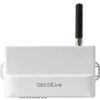
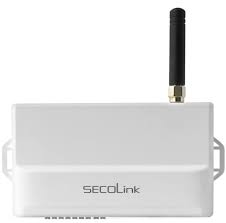
Secolink GSV0 – GSM/GPRS/LTE Cat-M1 Universal Alarm Communicator
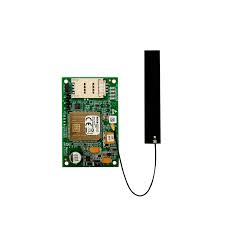
The Secolink GSV0 is a multi-network alarm communicator designed to bridge security control panels with smartphones and Central Monitoring Stations (CMS). It operates across GSM, GPRS, and LTE Cat-M1 cellular networks, giving it reliable reach even in areas where older 2G infrastructure is being phased out. The GSV0 is manufactured in Lithuania by Kodinis Raktas UAB and carries EN 50131-1 Grade 2 certification, making it suitable for professional security installations.
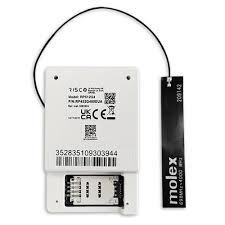
The GSV0 series includes several hardware variants — the GSV0q, GSV0c, GSV0e, GSV0e4, and GSV0g — each sharing the same core architecture with minor connectivity differences. All variants accept a standard user-supplied SIM card. The GSV0g additionally supports a dual firmware mode, allowing it to operate as either a GSV0 (user SIM) or as a GSV1 (embedded eSIM with prepaid data plan).
Panel Compatibility and Connection Interfaces
One of the defining technical strengths of the GSV0 is its broad panel compatibility. It connects natively to:
- SECOLINK P-series control panels via the proprietary KRBUS serial data bus
- DSC Power Series panels via the serial data interface
- Paradox panels via the serial data interface
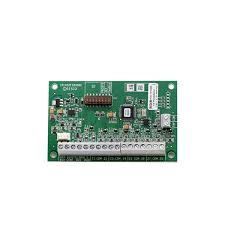
- Any third-party panel via the PSTN dialer input, key-switch zone, or PGM output terminals
This flexibility means the GSV0 can add GSM/LTE reporting capability to panels that have no built-in IP or cellular path. For panels without a compatible serial interface, the GSV0 intercepts the PSTN dialer output and translates Contact ID protocol events into GPRS/LTE transmissions to the monitoring station.
Cellular Communication Technology
The GSV0 uses an LTE Cat-M1 (also known as eMTC) radio alongside GPRS fallback. LTE Cat-M1 is a narrowband IoT standard specifically designed for low-data, high-reliability applications like alarm reporting. Compared to legacy GPRS, Cat-M1 delivers lower latency event delivery, improved in-building penetration, and longer device longevity as 2G networks are retired across many markets.
Event reports are transmitted to compatible CMS receivers using the Contact ID protocol over GPRS/LTE data channels. This replaces slow and unreliable PSTN dialing with a direct IP path, significantly reducing CMS acknowledgement times.
Remote Control and Cloud Connectivity
The GSV0 integrates with the ALARMSERVER.NET cloud platform and the SECOLINK PRO mobile application, available for both iOS and Android. Through this combination, the GSV0 enables several remote operations:
- Arm and disarm the connected security system from a smartphone
- Receive real-time push notifications for alarm events, zone triggers, and system status changes
- View zone activity history, including how recently motion was detected in each zone — particularly useful for monitoring elderly occupants
- Add compatible IP cameras to the SECOLINK PRO interface for a unified security view
- Track the armed/disarmed status icon in real time within the app
- Control output relays via short call or SMS command
Additionally, users can control the GSV0 directly via SMS commands without a data connection. Arm, disarm, output control, and status queries are all available through PIN-protected SMS strings (e.g., 1111A to arm, 1111D to disarm). This SMS fallback ensures the system remains operable even if cloud services are unreachable.
For installers, the GSV0 allows remote programming and diagnostics via ALARMSERVER.NET when the end user grants permission — reducing the need for site revisits.
Cloud Licensing and Firmware Management
The GSV0 cloud services operate on a renewable licence model. Upon initial setup, the device includes a 6-month cloud service period. Thereafter, services are renewed by purchasing a WLCT voucher from the Secolink online shop. If the licence lapses, internet control is suspended but SMS control remains fully functional.
Firmware is field-upgradeable. Updates can be pushed over the air via SMS (using the command [PIN]UPGRADE) or applied locally via a micro-USB cable and the GSV0 GSV1 Loader software on Windows. The SECOLINK Europe SIM card requires firmware version 1.39 or higher to operate. Firmware version can be queried at any time by sending the SMS command [PIN]i.
Programming Interface
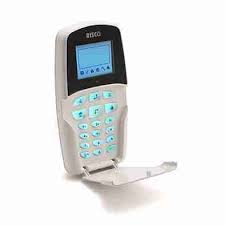
The GSV0 is configured using the GSV0 GSV1 Loader desktop software (Windows). When installed alongside a SECOLINK control panel (with a compatible keypad such as the KM24A or KM25), programming can also be performed directly from the keypad. Key programmable parameters include:
- Reporting server addresses and port numbers
- Phone numbers for SMS/call notifications (up to 5 user numbers)
- Input zone functions and PGM output behaviour
- SMS language and encoded/plain text response mode
- Partition arm/disarm assignments
- Voice guide language (GSV0g with GSV1 firmware: English, Spanish, French, Greek, Hungarian, Italian, Lithuanian, Portuguese, Russian, Slovak)
Who Is This Best Suited For?
- Security installers and integrators working across mixed-brand panel environments. The GSV0’s PSTN interception and serial port interfaces mean a single communicator model covers DSC, Paradox, SECOLINK, and most other panels — reducing inventory complexity.
- Property owners upgrading legacy systems. Sites with existing DSC or Paradox panels gain LTE Cat-M1 reporting and smartphone control without replacing the control panel. The GSV0 adds cloud connectivity to hardware already in place.
- Monitoring stations (CMS operators) transitioning clients away from PSTN lines. The GSV0 delivers Contact ID events over IP via GPRS/LTE, replacing unreliable analogue dialler reporting with a data-channel path.
- Residential and light commercial users who want self-monitoring via smartphone. The SECOLINK PRO app delivers real-time push notifications and remote arm/disarm, making the GSV0 viable for properties without a monitoring station contract.
- Installers in markets where 2G networks are being decommissioned. The LTE Cat-M1 radio ensures the GSV0 remains operational as networks evolve, unlike GPRS-only communicators that face obsolescence.
Technical Specifications
Cellular Communication
| Parameter | Specification |
|---|---|
| Network technologies | GSM / GPRS / LTE Cat-M1 (eMTC) |
| Antenna connector | SMA (external antenna included) |
| SIM card type | Standard SIM (user-supplied) |
| SECOLINK Europe SIM compatible | Yes (firmware v1.39 or higher required) |
Panel Compatibility
| Parameter | Specification |
|---|---|
| Compatible panels (native serial) | SECOLINK P-series, DSC Power Series, Paradox |
| Compatible panels (PSTN/zone/PGM) | All third-party panels with PSTN dialler, key-switch zone, or PGM output |
| Serial data interface | SERIAL port (must be unlocked for some configurations — firmware v1.16+) |
| Reporting protocol | Contact ID via GPRS/LTE |
Power Supply
| Parameter | Specification |
|---|---|
| Supply voltage | 12V DC |
| Programming interface | Micro-USB (USB Type B micro connector) |
Connectivity and Control
| Parameter | Specification |
|---|---|
| Remote control methods | ALARMSERVER.NET cloud, SMS commands, GSM voice call |
| Mobile application | SECOLINK PRO (iOS and Android) |
| User phone numbers supported | Up to 5 |
| SMS command language | PIN-protected text commands |
| Push notification support | Yes (via ALARMSERVER.NET cloud) |