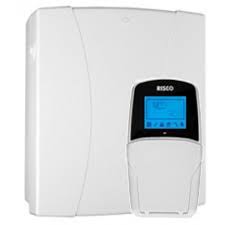
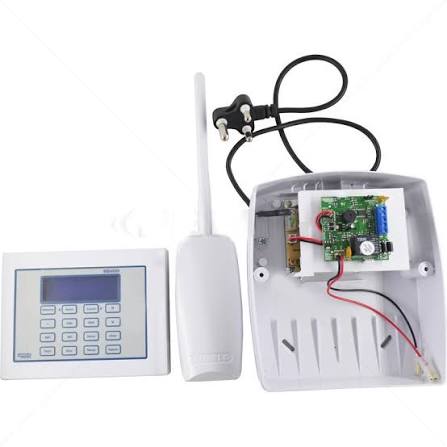
The Sherlotronics Mimic Base MB4000 is a wireless 24-hour panic and alarm monitoring base station. It receives signals from up to 2,000 code-hopping remotes and displays each activation at a central control point. As a result, one guard room or control desk can monitor an entire estate, mall, or care facility in real time.
Sherlotronics has manufactured radio security equipment since 1993. The MB4000 sits at the centre of its panic system range. It works alongside the ASKDRX data receiver, wireless panic remotes, and the Repeater 800 for extended coverage. In Kenya, this makes it a strong fit for gated communities in Kitengela, Syokimau, and Ruiru, as well as office parks along Mombasa Road and retirement or frail-care facilities across Nairobi.
Large Remote Capacity with Code-Hopping Security
The MB4000 stores up to 2,000 wireless remotes in memory. Each remote transmits using code-hopping encryption. Consequently, the signal changes with every press, which blocks replay and cloning attacks. This matters in high-density installations where hundreds of tenants or residents each carry a panic button.
Remotes operate on 403MHz or 433MHz. In open air, transmission range reaches 500 metres. For larger estates, the Repeater 800 extends coverage even further. Therefore, a single MB4000 base can serve properties that span several acres.
SMS Programming and GSM Reporting
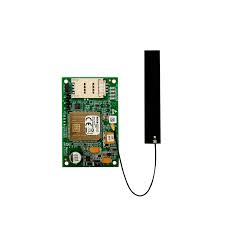
Administration is handled remotely through SMS. An installer can enrol new remotes, remove lost ones, and send commands to the MB4000 by text message. There is no need to visit the site for routine changes. Furthermore, the base supports SMS output through a compatible GSM modem, so alerts can reach a phone or an off-site monitoring centre over the Safaricom or Airtel network.
Each remote can carry a 40-character custom text label. In practice, an activation displays as “House 42 — Gate Panic” rather than a raw code. Response teams therefore know exactly where to go.
Event Logging, Backup, and Monitoring Software
The MB4000 connects to a PC over USB 2.0 and runs a monitoring software GUI. The software provides reporting, user access codes, and full event logging of every action on the system. In addition, a microSD card slot allows the remote database and settings to be backed up. If a unit ever needs replacement, the configuration restores in minutes.
Eight user passwords control who can change settings. Moreover, an internal real-time clock keeps accurate time and date for several days if the unit loses power — so event logs stay trustworthy through Nairobi’s occasional outages.
Hardware Inputs, Outputs, and Power
The base panel includes two relays and one siren output for local sounders or strobes. Built-in AC fail and low battery detection report power problems automatically. Meanwhile, the RS-485 BUS connects the external data receiver, keeping the antenna and receiver positioned where radio reception is strongest.
Power input ranges from 9.8V to 16V DC, which suits a standard 12V battery-backed power supply. Current draw stays above roughly 60mA on transmit and around 10mA in sleep, so a backup battery carries the system comfortably through load-shedding or blackouts.
Who Is This Best Suited For
- Gated estates and housing communities — the 2,000-remote memory covers every household, and the 500m open-air range (extendable via repeaters) spans large compounds in areas like Kitengela, Juja, and Athi River.
- Shopping malls and retail centres — 40-character custom labels identify each shop’s panic button instantly, so security teams respond to the exact unit.
- Retirement villages and frail-care facilities — the MB4000 doubles as a nurse-call system, with full event logging that records the time of every call for duty-of-care records.
- Office parks and business complexes — RS-485 data receiver placement and repeater support allow coverage across multiple blocks from one control room.
- Resorts and hospitality properties — SMS-based remote enrolment lets management add or remove staff panic remotes without an installer visit.
- Security companies and control rooms — GSM modem output pushes alerts off-site, while USB monitoring software provides reporting and audit trails for clients.