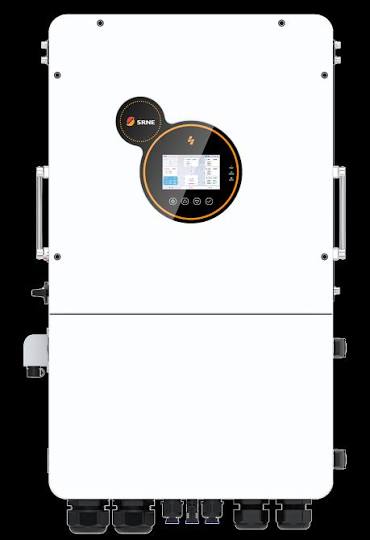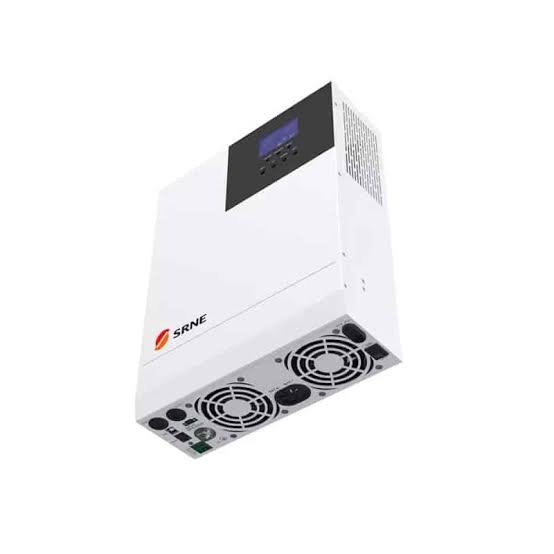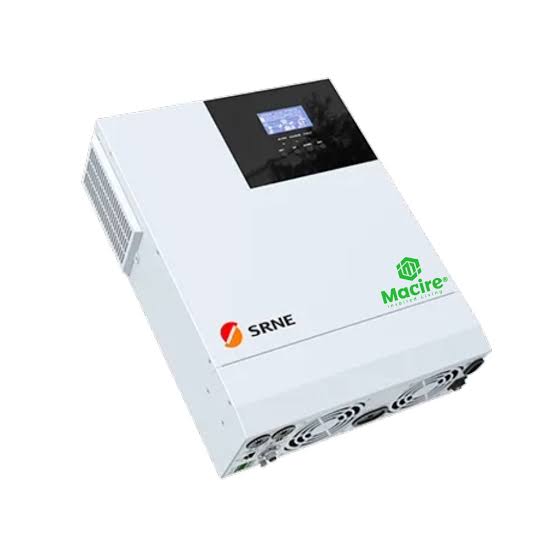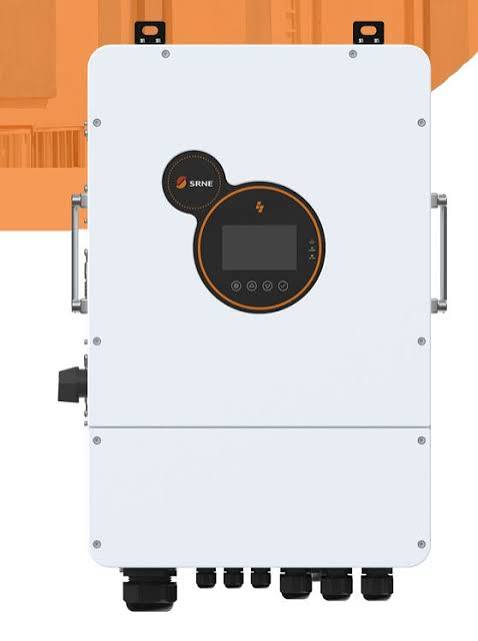
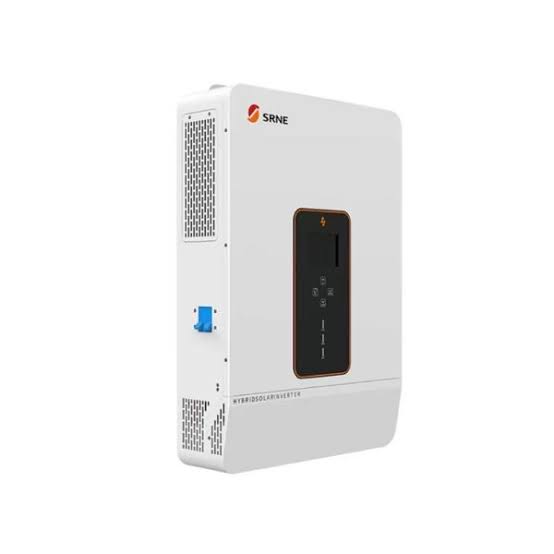
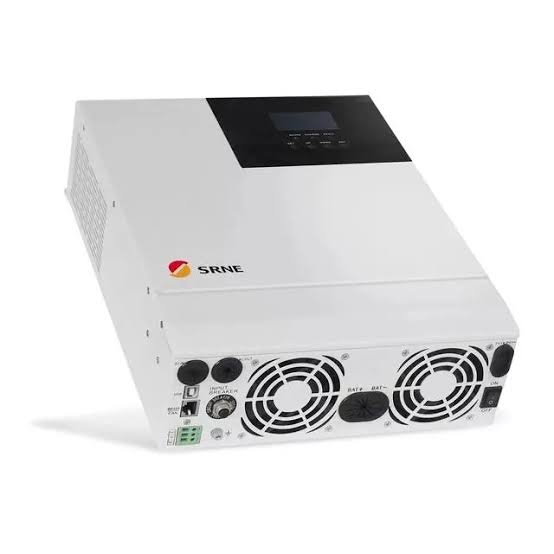
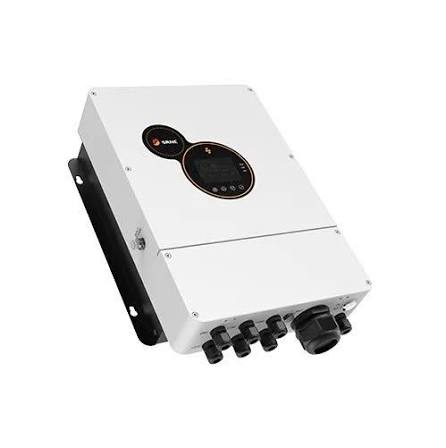
The SRNE ASP48100S200-H is a 48V, 10,000W hybrid solar inverter built for households and small businesses running heavier loads than a 6kW system can carry. It uses two independent MPPT solar charge controllers and can be paralleled from one unit up to six.
Against the SRNE HYP4860S100-H’s 6,200W rating, the SRNE ASP48100S200-H steps up on every front that matters for a bigger system: more output power, higher charging current, and a larger total solar array capacity.
What it does
Each SRNE ASP48100S200-H accepts up to 11,000W of solar input, split across two MPPT trackers rated at 5,500W each. Like the smaller SRNE HYP series, the dual-MPPT design suits roofs with split orientation — one string tracks an east-facing array, the other tracks west, each optimized independently.
Charging draws up to 200A from solar, 120A from grid or generator, and up to 200A combined in hybrid mode. That’s enough current to bring a large 48V battery bank back to full charge in a fraction of the time a smaller inverter would need, which matters when KPLC outages in Nairobi or Mombasa run into the night.
Key specifications
- Rated output power: 10,000W continuous, 15,000W peak
- Output voltage: 230VAC, single-phase (three-phase available when units are paralleled)
- Waveform: pure sine wave
- Output mode: off-grid (default) or hybrid
- Battery voltage: 48VDC — lithium-ion, lead-acid, or user-defined profiles
- Battery voltage range: 40VDC to 60VDC
- MPPT trackers: 2, independent
- Maximum PV array power: 11,000W total (5,500W per tracker)
- Maximum input current: 22A per tracker
- Maximum open circuit voltage: 500VDC per tracker
- MPPT voltage range: 125VDC to 425VDC
- Maximum solar charging current: 200A
- Maximum grid/generator charging current: 120A
- Maximum hybrid charging current: 200A
- Grid/generator input voltage range: 90VAC–275VAC
- Bypass overload current: 63A
- MPPT tracking efficiency: 99.9%
- Maximum efficiency: 92%
- Load motor starting capacity: 6HP
- Transfer time: 10 milliseconds (typical)
- Parallel capacity: 1 to 6 units, single-phase or three-phase
- Dimensions: 620mm x 445mm x 130mm
- Weight: 27kg
- Noise level: under 60dB
- Protection rating: IP20, indoor installation only
- Operating temperature: -10°C to 55°C, output derates above 45°C
- Warranty: 2 years
Scaling power with parallel installation
One SRNE ASP48100S200-H covers 10kW of continuous load. Paralleling multiple units pushes that further:
- Up to 6 units, in single-phase or three-phase configuration
- 60kW total across a fully paralleled six-unit bank
- Time-slot charging control, so the system can favor mains during off-peak tariff hours and switch to solar or battery when tariffs peak
This suits larger commercial and light-industrial sites in Kenya — office parks, agri-processing plants, or multi-unit commercial buildings — where load requirements exceed what a single residential-scale inverter provides.
Built-in protection
The SRNE ASP48100S200-H carries the same protection depth as SRNE’s smaller hybrid models, sized for its higher current ratings:
- PV over-current, over-power, and night reverse-current protection
- Mains input over-voltage and under-voltage protection
- Battery over-voltage and low-voltage protection
- Load output short-circuit and overload protection
- Heat sink over-temperature protection with automatic derating above 45°C
- Parallel connection fault protection across voltage, current sharing, and synchronization
Communication runs over RS485, CAN, USB, or dry contact, with Wi-Fi and GPRS available as optional external modules — useful for installers monitoring commercial sites remotely rather than dispatching a technician for every alert.
Deployment scenarios in Kenya
High-consumption Nairobi and Mombasa households A single SRNE ASP48100S200-H with a large 48V lithium battery bank runs air conditioning, water heating, borehole pumps, and full household loads through extended KPLC outages, with 6HP motor starting capacity for high-draw equipment.
Commercial and light-industrial sites Paralleling multiple SRNE ASP48100S200-H units builds toward 60kW for offices, agri-processing facilities, or multi-tenant commercial buildings in Nakuru or Eldoret where a single 10kW inverter isn’t enough.
Split-orientation solar installations With 11,000W of total PV input across two independent MPPT trackers, the SRNE ASP48100S200-H handles roofs where panels face two directions — common on multi-section commercial roofs and larger residential properties.
Frequently asked questions
How is the SRNE ASP48100S200-H different from the SRNE HYP4860S100-H? The ASP48100S200-H is rated at 10,000W with 200A maximum solar charging current and 11,000W total PV input. The HYP4860S100-H is rated at 6,200W with 100A maximum solar charging current and 9,000W total PV input. Choose the ASP48100S200-H for larger loads or bigger solar arrays.
How many SRNE ASP48100S200-H units can run in parallel? Up to six units, in either single-phase or three-phase configuration, reaching 60kW total.
What battery types work with the SRNE ASP48100S200-H? Lithium-ion, lead-acid, or user-defined profiles, rated at 48VDC with an operating range of 40VDC to 60VDC.
What is the maximum solar array size for one SRNE ASP48100S200-H? 11,000W total across two MPPT trackers, 5,500W per tracker, with each tracker rated up to 500VDC open circuit voltage.
Can the SRNE ASP48100S200-H be installed outdoors? No. It carries an IP20 protection rating and is designed for indoor installation only, in a dry, ventilated space within the -10°C to 55°C operating range.