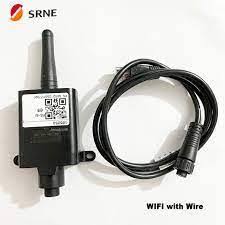
The SRNE Solarman LS4G-6-G data logger connects a solar inverter to the SOLARMAN Smart cloud platform. It transmits system data over 4G, 2G, or WiFi 6, so installers can choose the connection that fits the site. For rural Kenyan installations without reliable broadband, the 4G/2G fallback keeps monitoring running on the mobile network instead of depending on a fixed router.
Dual-Mode Connectivity for Kenyan Sites
The LS4G-6-G ships with a remote communication interface covering 4G, 2G, and WiFi 6. A 4G external antenna handles cellular reception, while the WiFi radio connects to a local router when one is available. This dual-mode setup matters in Kenya, where solar installations often sit in areas with patchy fixed-line internet but decent mobile network coverage from Safaricom or Airtel.
Because the logger accepts a chip card or plug-in SIM card, switching between carriers only takes a card swap. Meanwhile, working power stays under 4W, so the logger draws minimal current from the inverter’s own supply and doesn’t need a separate power source.
Data Interface and Compatibility
The LS4G-6-G reads inverter data through USB, RS485, RS232, or TTL connections. This range of interfaces means the logger adapts to different SRNE inverter models without requiring a separate adapter for each one. External connectors include USB 2.0, USB 3.0, an aeronautical head in both big and small formats, and a DB9 port, covering most SRNE hybrid and off-grid inverter designs.
Onboard storage sits at 8MB. That capacity buffers data locally during a network outage, then syncs to the SOLARMAN Smart platform once connectivity returns. Given that Kenya still experiences periodic KPLC power interruptions, this buffering prevents gaps in the historical generation record.
Data Transmission and Configuration
By default, the LS4G-6-G reports data to the cloud every 5 minutes, with a serial communication rate of 9600bps that can be adjusted between 1200 and 115200bps. Configuration happens remotely through the server or locally through the SOLARMAN Smart app, so a technician doesn’t need physical access to the logger after the initial setup.
The logger supports real-time control and breakpoint resuming. Real-time control lets an installer adjust inverter parameters remotely, useful for O&M teams managing multiple sites across Nairobi and beyond without a site visit for every change. Breakpoint resuming means data transmission picks up where it left off after a signal drop, rather than losing the interval entirely.
Build and Environmental Rating
The LS4G-6-G operates across a working temperature range of -30°C to 70°C and tolerates humidity from 10% to 90% without condensation. Storage temperature extends further, from -45°C to 90°C. These figures matter for installations exposed to direct sun on a rooftop enclosure, or for coastal sites in Mombasa where humidity runs consistently high.
Who Is This Data Logger Best Suited For
- Off-grid and rural installers: The 4G/2G fallback keeps the SOLARMAN Smart connection active in areas without fixed broadband, since the logger only needs mobile network coverage and a SIM card.
- O&M teams managing multiple sites: Real-time control and remote configuration let a technician adjust inverter settings from the SOLARMAN Smart app, cutting down on site visits for routine parameter changes.
- Installations in unstable-power areas: The 8MB onboard storage buffers data during a KPLC outage or network drop, then syncs automatically once power and connectivity return, so the generation log stays complete.
- Multi-inverter households or SMEs: The USB, RS485, RS232, and TTL data interfaces mean the LS4G-6-G fits a range of SRNE inverter models, reducing the need for model-specific accessories.
- Coastal or high-humidity sites: The 10%-90% non-condensing humidity rating and wide temperature tolerance suit Mombasa’s climate as well as Nairobi’s cooler highland conditions.
Communication Parameters
| Parameter | Specification |
|---|---|
| Product Model | LS4G-6-G |
| Remote Communication Interface | 4G + 2G + WiFi 6 |
| Antenna | 4G external antenna |
| Data Interface | USB, RS485, RS232, TTL |
| Working Voltage | DC 5-12V |
| Working Power | ≤4W |
Hardware Parameters
| Parameter | Specification |
|---|---|
| External Interface | USB 2.0, USB 3.0, Aeronautical head (Big/Small), DB9 |
| Data Storage | 8MB |
| SIM Card | Chip card / Plug-in card |
| Working Temperature | -30°C to 70°C |
| Working Humidity | 10%-90%, no condensation |
| Storage Temperature | -45°C to 90°C |
| Storage Humidity | <40%, no condensation |
Software Parameters
| Parameter | Specification |
|---|---|
| No. of Connections | One |
| Serial Communication Rate | Default 9600bps (1200-115200bps optional) |
| Data Transmission Interval | Default 5 minutes |
| User Configuration | Remote server / SOLARMAN Smart APP |
| Firmware Upgrade | Local or remote |
| Real-time Control | Supported |
| Breakpoint Resuming | Supported |