
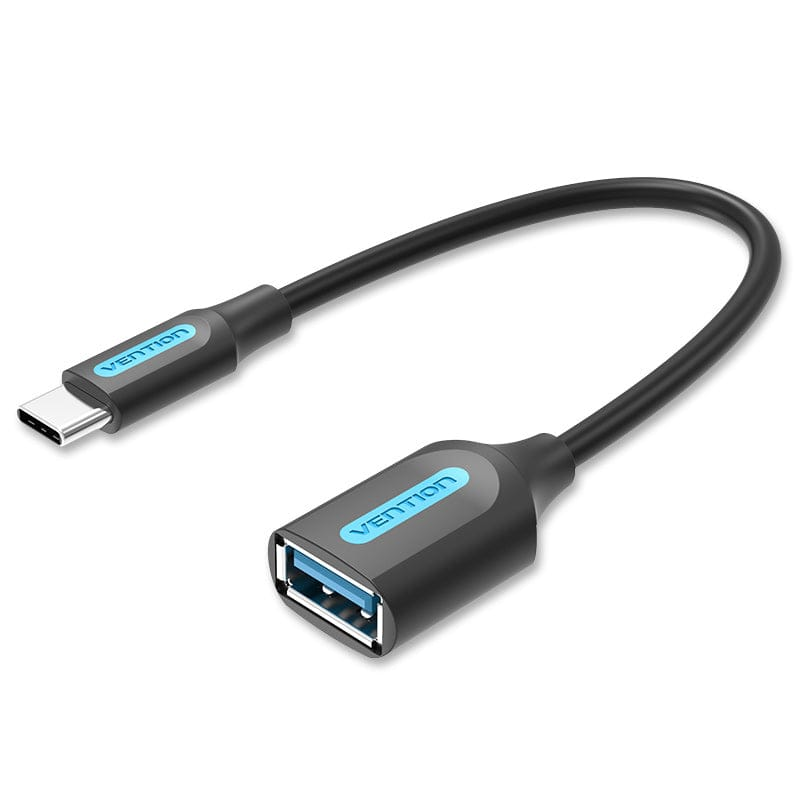
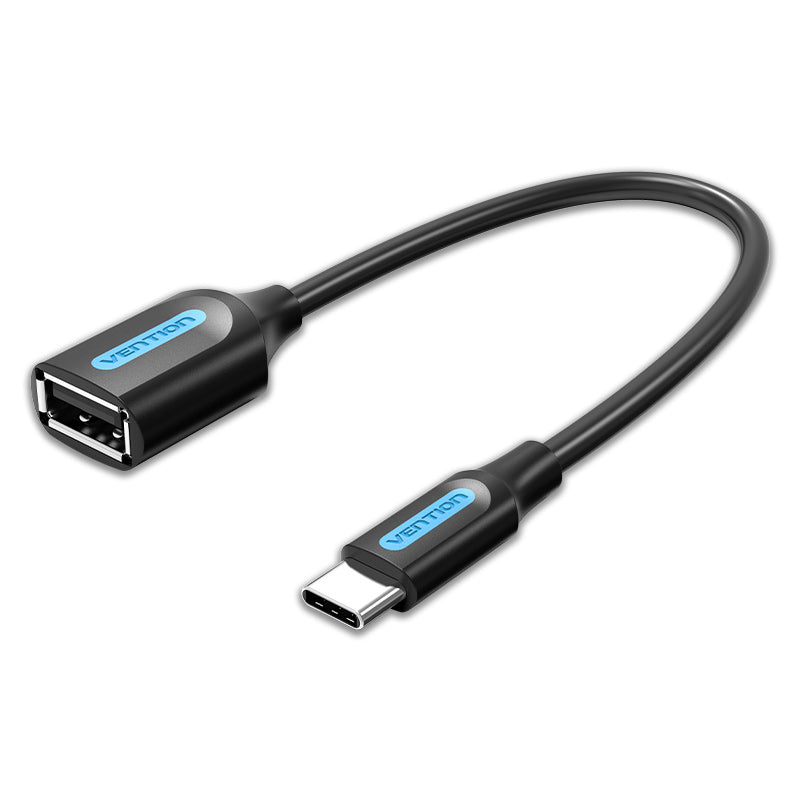
Vention USB 3.1 (Gen 1) C Male to A Female OTG Cable 0.15M Black PVC Type
The Vention USB 3.1 (Gen 1) C Male to A Female OTG Cable delivers high-speed USB 3.0 connectivity between USB-C devices and standard USB-A peripherals through a compact 0.15-meter design. This cable provides transfer speeds up to 5Gbps while maintaining the portability advantages of ultra-short cable length. It’s engineered for professionals, content creators, and mobile users who need fast data access from USB flash drives, external storage, and other peripherals without the bulk of longer cables.
Technical Specifications
Performance Characteristics
- Data Transfer Rate: Up to 5Gbps (USB 3.1 Gen 1 / USB 3.0 standard)
- USB Version: USB 3.1 Gen 1 (equivalent to USB 3.0)
- Backward Compatibility: USB 2.0 (480Mbps), USB 1.1 (12Mbps)
- Power Output: Up to 3A for connected peripherals
- OTG Protocol: Full USB On-The-Go host and peripheral support
- Simultaneous Operation: Data transfer and power delivery
Physical Design
- Cable Length: 0.15 meters (15cm / 6 inches)
- Connector Type A: USB Type-C male (24-pin reversible)
- Connector Type B: USB 3.0 Type-A female receptacle (9-pin)
- Cable Jacket Material: PVC (Polyvinyl Chloride)
- Color: Black
- Cable Diameter: Approximately 4mm
- Weight: Approximately 10 grams
- Connector Finish: Nickel-plated contacts
- Strain Relief: Integrated boot design at both connectors
Compatibility Specifications
- Host Devices: USB-C smartphones, tablets, laptops, and desktop computers with OTG support
- Peripheral Devices: USB 3.0 flash drives, external SSDs/HDDs, card readers, keyboards, mice, game controllers, USB hubs, webcams, printers, scanners
- Operating Systems: Android 5.0 and later, Windows 7 and later, macOS 10.10 and later, Chrome OS, Linux kernel 3.x+
- Device Classes: USB Mass Storage Class, HID (Human Interface Device), USB Audio Class, USB Video Class, MTP/PTP protocols
Electrical Specifications
- Operating Voltage: 5V DC
- Maximum Current: 3A output for peripherals
- Operating Temperature: -10°C to 55°C
- Storage Temperature: -20°C to 75°C
- Humidity Tolerance: 10% to 95% RH (non-condensing)
- Insulation Resistance: >10MΩ at 500V DC
Use Cases and Applications
Professional Photography and Videography
Photographers transfer RAW image files from USB 3.0 card readers to smartphones for immediate editing and client previews during location shoots. The 5Gbps speed handles large 50MB+ RAW files efficiently, completing transfers in seconds rather than minutes. Videographers move 4K footage from cameras to tablets for on-site editing without laptop dependency.
Mobile Content Creation
Social media creators access footage stored on USB 3.0 flash drives for quick editing and posting during travel. The compact cable eliminates workspace clutter when editing in coffee shops or co-working spaces. YouTubers transfer video files between devices during multi-location production schedules without carrying bulky adapter collections.
Business and Enterprise Applications
Field service technicians connect USB diagnostic tools to tablets for equipment troubleshooting at customer sites. Sales representatives access presentation files from encrypted USB drives during client meetings with sensitive information. IT professionals use the cable for rapid data migration during device provisioning and troubleshooting operations.
High-Speed File Transfers
Users back up smartphone photos and videos to USB 3.0 external drives at ten times USB 2.0 speeds. The cable handles large file libraries efficiently, backing up 50GB of photos in approximately 90 seconds under optimal conditions. Professionals transfer project files between USB storage and tablets during deadline-critical workflows.
Gaming Peripherals
Mobile gamers connect USB 3.0 game controllers to Android smartphones for responsive gameplay with minimal input lag. Competitive players use USB gaming mice with tablets for precision control during tournaments. The high-speed connection ensures peripherals maintain full polling rates for optimal performance.
Educational Technology
Students connect USB 3.0 flash drives to Chromebooks for rapid file access during timed examinations or presentations. Teachers transfer large video lesson files to classroom tablets without waiting for slow USB 2.0 transfers. Educational institutions support USB document cameras and other peripherals requiring higher bandwidth.
External Storage Access
Users connect USB 3.0 external SSDs to smartphones for expanded storage capacity and fast app data access. The cable enables direct playback of high-bitrate video files stored on external drives without transferring to internal storage. Professionals access large design files or video projects stored on portable SSDs during mobile workflows.
Compatibility Considerations
This cable requires host devices with USB OTG (On-The-Go) support and USB 3.0 capability for maximum performance. Most USB-C smartphones, tablets, and laptops manufactured after 2016 include these features. However, users should verify specifications before purchase, as some budget devices may have USB-C ports limited to USB 2.0 speeds.
Compatible devices achieving full 5Gbps speeds include Samsung Galaxy S8 and newer, Google Pixel 2 and later, OnePlus 5 and newer, Xiaomi Mi 6 and newer, LG G6 and later, and most flagship Android smartphones from 2017 onward. Compatible tablets include iPad Pro (2018 and later with USB-C), Samsung Galaxy Tab S4 and newer, Microsoft Surface Go and Pro models, and most modern Chromebooks.
When connecting USB 2.0 peripherals, the cable automatically negotiates slower 480Mbps speeds while maintaining compatibility. The connected peripheral’s USB generation determines actual transfer speeds—a USB 2.0 flash drive will transfer at USB 2.0 speeds regardless of cable capability. For maximum performance, users should pair this cable with USB 3.0 certified peripherals.
Some high-power USB devices like bus-powered external hard drives may not function with all smartphones due to power output limitations. Smartphones typically provide 500mA to 900mA through OTG connections, while some drives require 1A or more. External drives with separate power adapters work reliably across all compatible devices.
iOS devices have restricted OTG functionality compared to Android platforms. iPad Pro models with USB-C support limited peripheral types including cameras, card readers, MIDI interfaces, and audio devices. Full USB storage access on iOS requires third-party apps and may not match Android’s native file management capabilities.
The cable does not support USB Power Delivery for charging host devices, DisplayPort Alt Mode for video output, or Thunderbolt protocols. It functions exclusively for USB data connections and peripheral power delivery. Users requiring display connectivity or laptop charging should consider dedicated USB-C cables designed for those specific functions.





 No products in the cart.