
Best Access Control Systems for Apartments in Nairobi (2026 Guide)
If you manage or own an apartment block in Nairobi, controlling who enters your premises is no longer optional. Break-ins, tailgating, and unauthorised access are among the most common security complaints across residential estates in areas like Kileleshwa, Kilimani, Parklands, and South B. A properly installed access control system addresses all three — and it does so without requiring a permanent guard at every door.
This guide covers the main types of access control available in Kenya today, the brands worth considering, what a basic installation costs, and how to choose the right system for your building’s size and budget.
What Is an Access Control System?
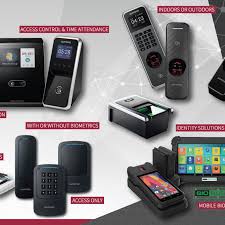
An access control system is an electronic solution that determines who can enter a building, specific floor, or individual unit — and logs every entry event with a timestamp. Instead of relying on physical keys (which can be duplicated or lost), the system authenticates residents and visitors using one or more credentials:
- Fingerprint or facial recognition (biometric)
- RFID proximity cards or key fobs
- PIN codes entered on a keypad
- Mobile credentials via NFC or Bluetooth
Most modern systems support a combination of these, so residents can choose whichever method suits them best.
Why Nairobi Apartments Specifically Need Access Control
Several factors make access control particularly relevant for Nairobi’s residential market:
- High-density buildings. Many apartment blocks in Nairobi house 20 to 100+ units. Physical keys across that many residents become unmanageable very quickly.
- Staff and visitor management. Domestic workers, delivery riders, and maintenance contractors enter residential buildings constantly. Access control lets you grant time-limited or zone-restricted access without issuing permanent keys.
- Guard supplementation, not replacement. Even buildings with a guardhouse benefit from electronic access at individual doors — the guard cannot be everywhere at once.
- Audit trails. When an incident occurs, a log of who entered at what time is valuable both for internal investigations and for working with police.
Types of Access Control Systems
1. Standalone Biometric Systems
A standalone system has the reader, controller, and lock mechanism in a single unit mounted directly at the door. There is no central server — all data is stored in the device itself.
Best for: Single entry points, individual unit doors, small apartment blocks of 10–20 units.
Common models in Kenya:
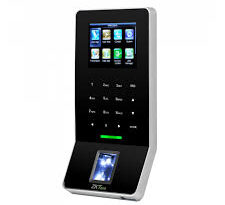
- ZKTeco F18 — fingerprint reader with 3,000 template capacity, supports 5,000 RFID cards and 30,000 log entries. Widely available in Nairobi and priced around KSh 15,000–19,000 per unit.
- ZKTeco SpeedFace-V3L — adds facial recognition and an anti-spoofing algorithm to reject photo or video attempts. Suited for main gate or lobby installations.
Limitations: No centralised management. If you have 10 doors, you manage each device separately.
2. Networked Access Control Systems
In a networked setup, multiple readers connect to a central controller, which is managed through software on a local server or in the cloud. Administrators can add or remove credentials, set access schedules, and pull reports from one interface.
Best for: Multi-entry apartment blocks with 3+ access points — main gate, parking, lobby, gym, rooftop.
Common brands in Kenya:
- ZKTeco inBIO Series — supports 4-door control from a single panel. Integrates with ZKBioSecurity software for centralised management across all readers.
- Suprema BioStation 2 — used across corporate and high-end residential installations in Kenya. Supports fingerprint, card, and mobile credentials. IP65-rated for outdoor gate installations.
Advantage: When a tenant moves out, you disable their credentials instantly across all doors simultaneously — no lock changes required.
3. RFID Card and Fob Systems
RFID-based systems authenticate residents via a proximity card or key fob (similar to a hotel room card). They are simpler to deploy than biometric systems and cost less per door.
Best for: Apartment estates where residents prefer not to use biometrics, or as a supplementary credential alongside fingerprint readers.
Typical cost: Readers from KSh 4,000–10,000 per unit; cards from KSh 50–150 each.
Limitation: Cards can be lost, borrowed, or cloned. For this reason, most security professionals in Kenya recommend pairing RFID with biometric verification at the main gate.
4. Video Intercom Systems
A video intercom is not strictly an access control system on its own, but it is a common complement to one. Visitors press a button at the gate, the resident sees a live video feed on a handset or smartphone app, and can remotely unlock the gate.
Best for: Apartment blocks where residents need to vet visitors without going downstairs.
Many Nairobi installers combine a video intercom at the pedestrian gate with a biometric reader for residents — so residents use their fingerprint, while visitors are buzzed in after visual verification.
Key Specifications to Check Before Buying
Before purchasing any access control system for a Nairobi apartment, confirm these specifications:
| Specification | Why It Matters |
|---|---|
| User/template capacity | A 50-unit block with two residents per unit plus domestic workers needs capacity for 150+ users minimum |
| Log/transaction capacity | More logs mean longer audit history; 30,000+ is standard for networked systems |
| IP rating | Outdoor readers (gate, parking) should be IP65 or higher for resistance to Nairobi’s rains |
| Backup power | The system must include a battery backup to maintain lock state during power outages |
| Lock type compatibility | Confirm compatibility with electromagnetic locks (280kg holding force common in Kenya) or electric strikes |
| Software licensing | Some brands charge recurring software fees; confirm whether the management software is perpetual or subscription-based |
Recommended Brands Available in Kenya
ZKTeco
The most widely deployed access control brand in Kenya. ZKTeco devices are available from multiple Nairobi distributors, which keeps prices competitive and spare parts accessible. The F18 and inBIO series cover most residential use cases from standalone single-door to multi-door networked installations. Proftech stocks a full range of ZKTeco access control systems including readers, controllers, and accessories.
Suprema
A South Korean manufacturer with a strong reputation for biometric accuracy and build quality. Suprema’s BioStation and BioEntry series are common in mid-to-high-end residential and commercial installations. The XPass 2 outdoor reader carries IP65/IP67 and IK08 vandal-proof ratings — relevant for exposed gate installations in Nairobi estates.
Hikvision
Better known for CCTV, Hikvision also produces a range of access control readers and controllers that integrate directly with their NVR and camera systems. A good option if your apartment block is already running Hikvision CCTV, as the two systems can share a management interface.
What Does Installation Cost in Nairobi?
Costs vary based on the number of access points, the credential type, and whether installation is included. As a reference point, a complete single-door biometric installation — covering the ZKTeco F18 device, power supply with battery backup, 280kg electromagnetic lock, exit button, break glass, and labour — comes in at approximately KSh 45,000–55,000 per door, based on current market rates.
For a typical apartment block with a main pedestrian gate, vehicle gate, lobby, and parking level, budget for 3–4 access points as a starting point, which typically puts the total installed cost in the KSh 150,000–220,000 range before any cabling or conduit work.
Choosing the Right System: A Quick Framework
| Building Type | Recommended Approach |
|---|---|
| Small block (10–20 units, 1–2 entry points) | Standalone ZKTeco biometric per door |
| Medium block (20–50 units, 3–5 entry points) | Networked system (ZKTeco inBIO or Suprema BioStation) with central management |
| Large estate (50+ units, multiple blocks) | Enterprise networked system with cloud management and video intercom integration |
| Budget-constrained | RFID card readers at main gate + biometric at lobby |
What to Ask Your Installer
Before signing off on any installation, ask your supplier these questions:
- Is the management software included or licensed separately?
- What happens to access during a power cut — do doors fail-safe (unlock) or fail-secure (lock)?
- Can we expand the system later if we add more doors?
- Is there a local warranty and who handles support if a device fails?
- Are the lock types and cable specs compatible with our existing door frames?
Final Thoughts
Access control is one of the highest-impact security investments an apartment block in Nairobi can make. The technology has matured significantly — systems that were enterprise-only five years ago are now accessible at mid-range budgets — and the local supply chain for ZKTeco and Suprema products is well-established, which keeps ongoing maintenance practical.
The right system depends on the number of entry points, the number of users, and whether centralised management is a priority. For most Nairobi apartment blocks, a networked biometric system covering the main gate and lobby — supplemented by RFID cards for secondary doors — offers a practical balance of security, convenience, and cost.
Proftech Power Systems supplies and installs ZKTeco and Suprema access control systems across Nairobi. Contact us on 0703 785 219 or email info@proftech.co.ke to discuss the right solution for your building.
 No products in the cart.