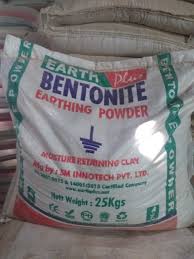
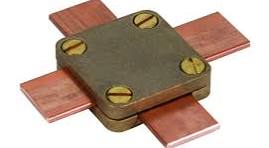
Bentonite | Earthing Compound
– Ground Enhancement Backfill Material
Bentonite Earthing Compound is a naturally occurring moisture-retaining clay mineral used as a ground enhancement material (GEM) in electrical earthing, bonding, and lightning protection systems. Composed primarily of montmorillonite — a sodium-based clay with remarkable properties — it functions as a backfill compound surrounding earth electrodes such as copper rods or earth mats, creating an interface between the electrode and the surrounding soil that dramatically reduces electrical resistance. CMS Industries
Available in both granular and powder form, granular bentonite is the preferred option for filling trenches as it can be mixed directly in the cable trench, while powder bentonite is more suitable for pouring into boreholes to ensure the mixture is thin enough to reach the bottom of the hole. CMS Industries
How It Works
Bentonite lowers resistance to earth by providing ground enhancement — effectively reducing the resistance between the soil and earth electrode by retaining moisture. This inherent ability to absorb and retain rainwater increases the electrical conductivity of the earthing compound in positive correlation to local climatic conditions, specifically average rainfall levels. The compound typically achieves a resistivity level of 3 ohms.m. Power and Cables
Bentonite will absorb up to 5 times its weight in water, and the moisture-retaining clay will swell to thirteen times its dry volume. At 6 times its dry volume, the earthing compound is very dense and in a pasty clay condition that can retain shape and adhere to surfaces. Power and Cables This swelling action effectively increases the surface contact area between the electrode and the surrounding soil, lowering ground resistance without the need for driving electrodes deeper.
Key Features & Benefits
Superior Moisture Retention — Bentonite can absorb and retain large quantities of water, maintaining soil moisture around the electrode and enhancing the conductivity of the earthing system, especially in dry or sandy soils. CMS Industries
Low Resistivity When Hydrated — When hydrated, bentonite forms a highly conductive gel that reduces soil resistivity, ensuring efficient dissipation of fault currents into the ground. CMS Industries
Non-Corrosive & Electrode-Safe — Unlike carbon-based backfills, which can contain sulfur and other elements harmful to copper electrodes, bentonite’s chemical neutrality makes it safer for long-term applications. CMS Industries
Eco-Friendly & Non-Toxic — Unlike chemicals such as salt, bentonite does not corrode electrodes or harm the environment. It is a natural material that is safe for long-term use. CMS Industries
Long-Term Stability — Bentonite’s swelling properties ensure it remains in close contact with the electrode, minimising the risk of air gaps that can increase resistance. CMS Industries
Challenging Ground Conditions — Bentonite is a cost-efficient material for backfilling earth electrodes and improving performance when it is physically impossible to drive earth rods deeper, and where challenging ground conditions exist such as rock, granite, and other similar situations. CMS Industries
Corrosion Protection — When soils and ground conditions are highly acidic or alkaline, backfill earthing compounds such as bentonite can significantly extend the life cycle of bare copper earth tapes and earth rods. Power and Cables
Thermally Stable Duct Filling — Electrically conductive bentonite is a thermally stable duct filling compound also used to backfill cable trenches containing copper electrodes, as specified in Appendix C of ENA TS 09-02. Power and Cables
Applications
Bentonite Earthing Compound is suited for use across a broad range of electrical and civil engineering installations:
- Electrical substation earthing grids on high-resistivity ground
- Building and structural earthing systems (residential, commercial, industrial)
- Lightning Protection System (LPS) earth electrode backfill
- LV, MV, and HV earthing applications
- Solar farm and wind turbine grounding systems
- Telecommunications tower earthing
- Construction site temporary earthing
- Cable trench backfill around copper earth conductors
- Rocky, sandy, or granite terrain where standard earth rod driving is impractical
Installation Guide
- Soil Assessment — Conduct a soil resistivity test to determine the required quantity of bentonite and electrode configuration.
- Pit/Trench Preparation — Excavate an earth pit typically 2–3 metres deep, wide enough to accommodate both the electrode and the bentonite layer around it.
- Mixing — Mix bentonite powder with water in a ratio of 1:4 (1 part bentonite to 4 parts water) to form a slurry. Allow the mixture to swell for a few minutes until it reaches a gel-like consistency. CMS Industries For granular form, mix directly in the trench.
- Electrode Placement — Place the earth electrode (copper rod, plate, or pipe) vertically in the pit. Pour or pack bentonite around the electrode, ensuring full contact with no air gaps.
- Backfill & Compact — Backfill the pit with soil and compact firmly to eliminate voids. Water the area to initiate settling.
- Testing — Test the resistance of the completed earthing system to verify it meets the required standard (typically below 1 ohm for sensitive installations).
- Maintenance — Periodically check moisture content around the electrode, particularly in arid regions, and add water as needed to sustain conductivity.
Technical Specifications
| Parameter | Specification |
|---|---|
| Composition | Montmorillonite (sodium-based clay) |
| Available Forms | Granular / Powder |
| Typical Resistivity | ~3 ohms.m |
| Water Absorption | Up to 5× its dry weight |
| Swelling Capacity | Up to 13× its dry volume |
| Mixing Ratio (Slurry) | 1 part bentonite : 4 parts water |
| Typical Quantity Required | 10–15 kg per electrode (subject to soil conditions) |
| Standard Packaging | 25 kg / 50 kg bags |
| Target Earth Resistance | < 1 ohm (sensitive installations) |
| Nature | Non-toxic, eco-friendly, non-corrosive |
| Applicable Standards | ENA TS 09-02, BS 7430, IEC 62305-3, IS 3043, IEEE Std 80 |
| Compatible Electrodes | Copper rods, earth mats, copper tapes, GI pipes, plates |
| Compatible Soil Types | All soil types including rocky, sandy, and high-resistivity soils |