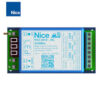

ET 1 Channel 434MHz Code Hopping Receiver
ET 1 Channel 434MHz Code Hopping Receiver represents a significant advancement in wireless access control technology. This sophisticated device utilizes rolling code encryption to provide unmatched security for residential and commercial applications, making it an essential component for modern gate automation and garage door systems.
Technical Specifications and Features
The ET 1 Channel 434MHz Code Hopping Receiver operates on the widely-adopted 434MHz frequency band, ensuring reliable communication across various environmental conditions. This receiver incorporates advanced code hopping technology, which generates a new encrypted code with each transmission, effectively preventing unauthorized access attempts and signal interception.
Key technical attributes include:
- Single-channel operation for streamlined installation and configuration
- Code hopping encryption technology with over 16 million possible combinations
- Compatible with most 434MHz transmitters featuring rolling code capability
- Compact design measuring approximately 85mm x 60mm x 25mm
- Operating voltage range from 12V to 24V DC
- Reception range up to 100 meters in open field conditions
Security Implementation and Code Hopping Technology
The code hopping functionality within the ET 1 Channel 434MHz Code Hopping Receiver provides superior protection compared to traditional fixed-code systems. Each time a compatible transmitter sends a signal, the receiver validates the encrypted rolling code sequence, ensuring that previously captured signals cannot be replayed by unauthorized individuals.
This technology proves particularly valuable in high-security environments where access control integrity remains paramount. The receiver’s algorithm synchronizes with paired transmitters, maintaining seamless operation while continuously updating security protocols.
Installation and Compatibility Considerations
Professional installation of the ET 1 Channel 434MHz Code Hopping Receiver requires basic electrical knowledge and adherence to local building codes. The device integrates seamlessly with existing gate operators, garage door mechanisms, and barrier control systems.
Compatibility extends to various manufacturer transmitters that support 434MHz frequency and rolling code protocols. However, verification of transmitter compatibility before purchase ensures optimal system performance and prevents operational issues.
Installation requirements include:
- Secure mounting location with adequate ventilation
- Proper antenna positioning for maximum signal reception
- Electrical connections following manufacturer specifications
- Programming of transmitter codes according to device manual
Applications and Use Cases
The ET 1 Channel 434MHz Code Hopping Receiver serves multiple applications across residential and commercial sectors. Homeowners benefit from enhanced garage door security, while businesses utilize this technology for automated gate access, parking barriers, and perimeter control systems.
Common applications encompass automated swing gates, sliding gate mechanisms, overhead garage doors, boom barriers, and industrial access points. The receiver’s reliability makes it suitable for high-traffic environments where consistent performance remains critical.
Performance and Environmental Durability
Engineered for long-term reliability, the ET 1 Channel 434MHz Code Hopping Receiver withstands various environmental challenges. The device operates effectively in temperature ranges from -20°C to +70°C, accommodating both indoor and outdoor installations.
Weather-resistant housing protects internal components from moisture, dust, and temperature fluctuations. This durability ensures consistent performance across seasons while minimizing maintenance requirements and system downtime.
Programming and User Management
The receiver supports multiple transmitter programming options, allowing property owners to manage user access efficiently. Programming procedures vary depending on specific model variations, but typically involve simple button sequences or DIP switch configurations.
User capacity generally accommodates between 100 to 500 transmitter codes, depending on memory specifications. This flexibility enables comprehensive access management for large residential properties or commercial facilities with multiple authorized users.