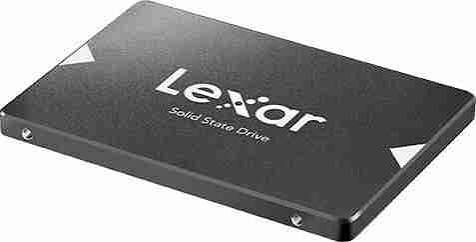
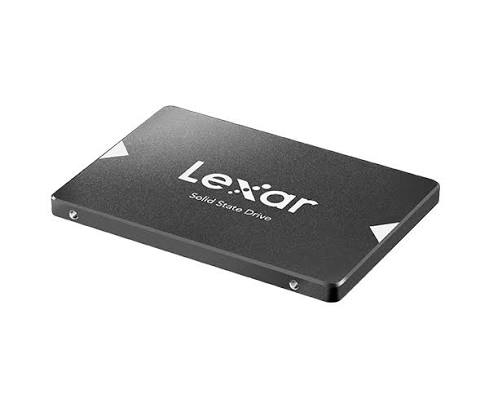
The Lexar NS100 512GB replaces a mechanical hard drive with a solid-state drive built around a SATA III 6Gb/s interface. Because the NS100 has no moving parts, it eliminates the spin-up delay and read/write head movement that slow down traditional hard drives during boot and file access. This particular SKU, LNS100-512RB, sits in the middle of the NS100 range between the 256GB and 1TB capacities, giving enough headroom for an operating system, applications, and a working set of files without moving into higher-capacity pricing.
Since the NS100 uses the older SATA III interface rather than NVMe, it targets a specific use case: systems that don’t have an M.2 NVMe slot, or upgrades where a 2.5″ drive bay is the only option available. That makes the NS100 a fit for refreshing an ageing laptop or budget desktop rather than a build already using PCIe-based storage.
Interface and Sequential Performance
The NS100 512GB delivers sequential read speeds of up to 550MB/s over its SATA III 6Gb/s connection. That figure sits near the practical ceiling for SATA III, which caps out around 600MB/s of raw interface bandwidth. Consequently, moving from a spinning hard drive (typically 80–160MB/s) to the NS100 produces a noticeable drop in boot times and application load times, even though SATA SSDs don’t reach the multi-gigabyte-per-second speeds of NVMe drives.
Durability and Form Factor
Built in a standard 2.5″ / 7mm form factor, the NS100 512GB fits the drive bays used in most laptops and desktop drive cages without requiring a spacer. The drive is rated for shock resistance up to 1500G over a 0.5ms half-sine wave and vibration resistance across a 10–2000Hz range. Together with the absence of moving parts, this construction reduces the risk of data loss from drops or vibration during transport — a relevant factor for laptops that move between locations regularly.
Endurance
Lexar rates the NS100 512GB at 256TB total bytes written (TBW), a figure that reflects how much data the drive can write over its lifespan before wear becomes a concern for typical consumer workloads. For a general-use system running an OS, browser, office applications, and moderate file transfers, that endurance figure comfortably outlasts the drive’s 3-year limited warranty period under normal use patterns.
Who Is This Best Suited For
- Owners of older laptops and desktops without an M.2 slot — the 2.5″ SATA III form factor fits legacy drive bays where NVMe isn’t an installation option.
- Budget-conscious system upgrades — 512GB of usable capacity covers an OS install plus a working set of applications and documents without paying for NVMe-tier speed that the system’s SATA interface couldn’t use anyway.
- Users prioritising reliability over peak throughput — a 256TB TBW rating and shock/vibration resistance suit everyday productivity use rather than write-intensive workloads like video editing or database hosting.
- Laptop users who travel or move their device frequently — the 1500G shock rating and 10–2000Hz vibration resistance reduce the risk of physical damage compared to a mechanical hard drive under the same conditions.
- IT technicians replacing failed hard drives in bulk — a standard 7mm 2.5″ form factor and SATA III interface keep compatibility straightforward across a wide range of existing systems.