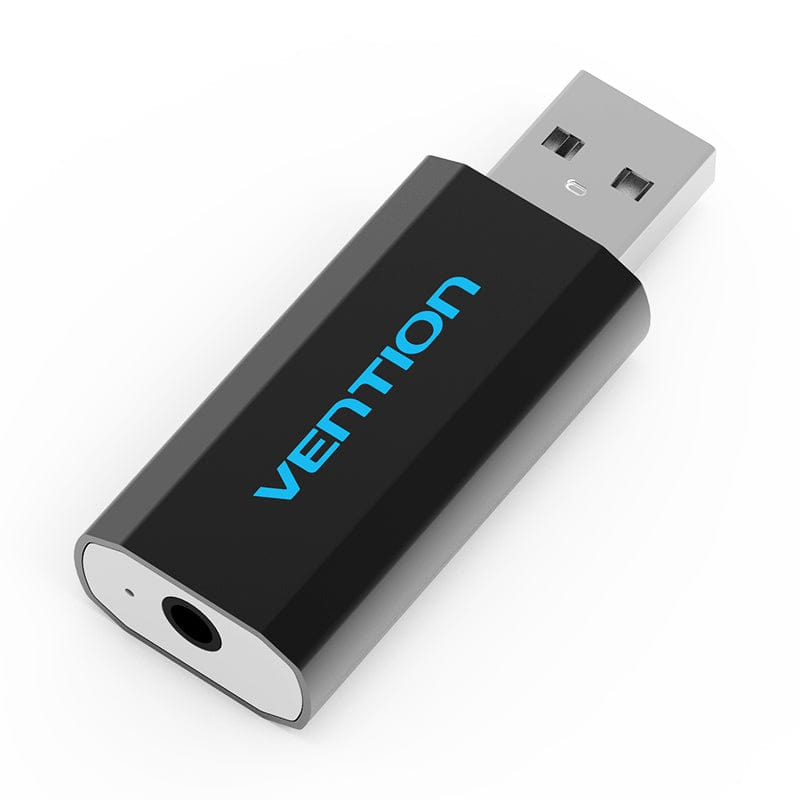
Vention USB External Sound Card Black Metal Type (CTIA)
The Vention USB External Sound Card with CTIA standard support delivers reliable audio connectivity for computers and laptops while ensuring compatibility with modern smartphone-style headsets. This plug-and-play adapter converts USB connectivity into a standard 3.5mm CTIA audio jack, accommodating four-pole headsets with integrated microphones commonly used with mobile devices. It’s designed for users seeking to connect CTIA headsets to computers, those experiencing audio hardware failures, or anyone requiring improved sound quality through external USB audio processing.
Technical Specifications
Audio Performance
- DAC Resolution: 16-bit digital-to-analog conversion
- Sample Rate: 48 kHz stereo audio
- Frequency Response: 20 Hz to 20 kHz ±3 dB
- Signal-to-Noise Ratio: ≥90 dB (A-weighted)
- Total Harmonic Distortion: <0.1% at 1 kHz
- Output Power: 30mW per channel at 32 ohms impedance
- Microphone Input Sensitivity: -38 dB to -42 dB
Connectivity
- USB Interface: USB 2.0 Type-A male connector
- Audio Jack: 3.5mm (1/8-inch) TRRS female connector (4-pole)
- Headset Standard: CTIA/AHJ wiring configuration (Left-Right-Ground-Mic)
- Impedance Support: Headphones 16-150 ohms (optimized for 32 ohms)
- Microphone Type: Compatible with electret condenser microphones (typical in headsets)
- Plug Detection: Automatic headset insertion detection
Physical Characteristics
- Housing Material: Aluminum alloy metal enclosure
- Surface Finish: Black anodized coating
- Cable Length: Integrated USB cable approximately 15cm
- Connector Plating: Gold-plated contacts for corrosion resistance
- Dimensions: Approximately 55mm × 22mm × 12mm (L × W × H)
- Weight: Approximately 28 grams
- Cable Type: Shielded USB cable with strain relief
Compatibility & Requirements
- Operating Systems: Windows 10/11, Windows 8/8.1, Windows 7, macOS 10.6+, Linux kernel 2.6+, Chrome OS
- USB Standards: USB 2.0/3.0/3.1/3.2 compatible
- Power Consumption: USB bus-powered, typically <100mA
- Driver Support: Native USB Audio Class 1.0/2.0 drivers
- Headset Compatibility: CTIA/AHJ standard four-pole headsets (most smartphones, tablets, modern gaming headsets)
Environmental & Compliance
- Operating Temperature: 0°C to 50°C (32°F to 122°F)
- Storage Temperature: -20°C to 70°C (-4°F to 158°F)
- Relative Humidity: 10% to 90% non-condensing
- Certifications: CE, FCC, RoHS 2.0 compliant
Use Cases & Applications
Mobile Headset PC Integration
Users who prefer smartphone headsets for computer work can connect their existing CTIA-standard earbuds or headsets directly to desktop or laptop systems. The adapter properly maps the microphone and audio channels that would otherwise be incompatible with standard computer audio jacks. For instance, popular headsets from Apple, Samsung, and other mobile manufacturers work seamlessly without requiring separate computer-specific models. This compatibility eliminates the need to purchase duplicate headsets for different devices.
Remote Work & Video Conferencing
Remote professionals conducting frequent video meetings benefit from using familiar mobile headsets on their computer systems. The CTIA adapter ensures that smartphone headsets with inline microphones function correctly during Zoom, Microsoft Teams, or Google Meet calls. Moreover, users can leverage high-quality mobile headsets they already own rather than investing in dedicated USB conferencing headsets. The inline microphone positioning on CTIA headsets often provides superior voice pickup compared to laptop-integrated microphones.
Gaming With Console Headsets
Gamers who use CTIA-standard headsets with PlayStation, Xbox, or Nintendo Switch controllers can utilize the same headsets for PC gaming. The adapter eliminates the need to purchase separate gaming headsets for computer use while maintaining microphone functionality for team communication. Additionally, the external USB processing often delivers cleaner audio than motherboard sound cards, enhancing gaming immersion. Competitive players appreciate the ability to use their preferred headset across multiple gaming platforms.
Audio Hardware Failure Resolution
When internal sound cards fail or audio ports become damaged, the Vention CTIA sound card provides immediate restoration of both audio output and microphone input through a single connection. Users experiencing non-functional combo jacks or separate audio ports can bypass problematic hardware entirely. This solution proves particularly cost-effective for laptops where internal audio repair requires expensive motherboard replacement. Furthermore, the external adapter installation takes seconds compared to hours of technical repair work.
Content Creation & Streaming
Streamers and content creators use CTIA-compatible headsets for monitoring audio while recording gameplay, podcasts, or tutorial content. The single-cable connection simplifies desk setups compared to separate headphone and microphone configurations. For instance, mobile streamers broadcasting via smartphones can use the same headset setup when switching to desktop streaming platforms. Budget-conscious creators appreciate achieving functional audio I/O without expensive dedicated streaming equipment.
Educational & E-Learning Applications
Students and educators participating in online classes benefit from connecting affordable CTIA headsets to school-issued laptops or personal computers. The adapter ensures that inexpensive smartphone earbuds function properly for virtual classroom participation. Moreover, schools deploying computer labs can provide external sound cards to accommodate various student-owned headsets regardless of connector type. This flexibility reduces equipment costs while ensuring all students can participate in audio-based lessons.
Multi-Device Audio Solution
Professionals who switch between smartphone and computer work throughout the day can use a single CTIA headset across all devices. The adapter enables seamless transition from mobile calls to computer-based tasks without changing headsets. Additionally, the compact metal housing fits easily into laptop bags for convenient portability between home and office environments. Users maintaining consistent audio quality across devices appreciate the unified headset experience.
Technical Support & Call Centers
Customer service representatives using CTIA-standard headsets can connect to computer telephony systems through USB rather than relying on traditional analog connections. The digital USB audio processing delivers clearer voice transmission compared to aging motherboard audio circuits. Furthermore, the inline microphone controls common on CTIA headsets provide convenient call management without accessing software interfaces. Support teams appreciate the reliable connection quality during extended shift work.
Compatibility Considerations
The Vention USB External Sound Card specifically supports CTIA (also known as AHJ) wiring standard, which represents the majority of modern smartphone and tablet headsets. Users should verify their headset follows CTIA pinout configuration: tip (left audio), ring 1 (right audio), ring 2 (ground), sleeve (microphone). OMTP standard headsets, used by some older devices, have reversed ground and microphone positions and will not function correctly without an additional OMTP-to-CTIA adapter.
Most headsets manufactured after 2010 for use with iPhones, Android devices, and gaming consoles utilize CTIA standard. However, some older Nokia devices and certain regional market headsets may use OMTP configuration. Users can identify compatibility issues if the microphone fails to register audio input or if excessive noise appears during recording. Consequently, verifying headset standard before purchase ensures proper functionality.
The adapter performs optimally with headsets featuring 32-ohm impedance and electret condenser microphones, which encompass most consumer mobile headsets and gaming peripherals. High-impedance studio headphones or dynamic microphones may experience reduced volume levels or sensitivity. Nevertheless, the device provides sufficient power for typical CTIA headsets including earbuds, over-ear headphones with integrated microphones, and gaming headsets designed for mobile platforms.