Access Control Systems
Complete Guide to Access Control Systems in 2025: Revolutionary Security Solutions for Modern Businesses
Understanding Access Control Systems in Today’s Security Landscape
Access control systems are the first line of defence against people who shouldn’t be there. They give people peace of mind and make homes and businesses safer. These advanced security systems have come a long way since the days of simple locks and keys. By 2025, they will use cutting-edge technologies like biometric authentication, cloud-based management, and AI-powered analytics.
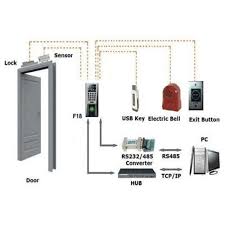
Modern access control systems use a mix of hardware and software to control who can enter physical spaces and use digital resources. These systems use both hardware and software to control who can enter a building or get to sensitive data. This makes sure that both physical and digital assets are safe.
Companies like Proftech offer a full range of access control components, from electromagnetic locks to advanced control panels, for businesses that need complete security solutions.
Essential Components of Modern Access Control Systems
Hardware Components
A good access control system needs a few key hardware parts that all work together perfectly:
Door hardware and electromagnetic locks
Strong locking systems are needed for professional installations. The Proftech 280KG Electric Magnetic Lock keeps doors securely closed even when the power goes out. This means that people who aren’t supposed to be there can’t get in.
Units for Power Supply
For continuous operation, reliable power distribution is still very important. The Access Control 3amp 12V Power Supply, for example, provides 36 watts of regulated power and battery backup support. This means that your access control system will keep working even when the power goes out.
Integration and Control Modules
More advanced systems need more advanced control modules. The 2 Door Interlocking Module lets you set up smart access sequencing for secure area control applications. This makes mantrap systems that stop tailgating and make facilities safer.
Credential Technologies
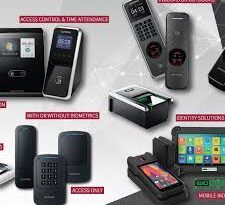
There are many types and combinations of credentials that property owners can use to meet their specific needs. These include key fobs, proximity cards, and mobile credentials. The choice of credential technology significantly impacts both security levels and user convenience.
Types of Access Control Systems: Finding the Right Fit
Role-Based Access Control (RBAC)
RBAC makes management easier and lowers the possibility of mistakes by granting permissions based on user roles inside an organisation. This strategy works especially well in big businesses where roles and responsibilities are well-defined.
Attribute-Based Access Control (ABAC)
ABAC provides fine-grained control by determining access based on a combination of attributes (such as user, resource, and environmental conditions). Organisations can develop intricate access rules based on several criteria at once thanks to this advanced model.
Discretionary and Mandatory Access Control
Certain organisational needs are still met by conventional models such as Mandatory Access Control (MAC) and Discretionary Access Control (DAC). While MAC enforces stringent, centralised policies typical of government and military applications, DAC gives resource owners flexibility in determining who has access, which may result in inconsistent security practices.
Revolutionary Biometric Technologies Transforming Access Control
Advanced Biometric Authentication Methods
Biometric authentication is becoming a cornerstone of modern access control systems, with devices relying on unique body characteristics like fingerprints, facial features, and retina scans, which cannot be duplicated or forged.
Fingerprint Recognition Systems
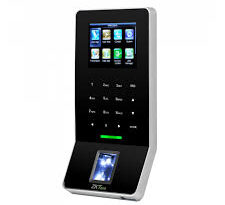
Fingerprinting is the most prevalent type of biometric in use, with scanners capturing unique ridge patterns to verify identities. It is fast, cheap, and on smartphones, office buildings, and secure installations. Basic fingerprint readers are as low as $200-$500, making it within the budget for small companies.
Facial Recognition Technology
Facial recognition uses facial bone structure analysis, like the distance between the eyes, nose shape, and jawline, to authenticate users. Facial recognition is used in newer security installations, phones, and airports and offers hands-free authentication. Facial recognition systems cost in the range of $1,000 to $2,500 per door, which points to high-end camera technology and AI processing.
Multi-Modal Biometric Systems
The integration of multiple modes of biometrics (e.g., face recognition, fingerprinting and speaker recognition) into single authentication systems will become more common, providing increased security and user convenience with multiple layers of authentication. Multi-modal biometric systems using more than one method provide maximum security for $2,000 to $4,000 per door.
Cloud-Based Access Control: The Future is Here
Advantages of Cloud Integration
Cloud access control and security products are scalable since they allow organizations to secure many sites from a single place. Scalability of the cloud is particularly essential in today’s dynamic business environment since organizations can undertake a base-level deployment and expand when needed without heavy infrastructure expenditures.
Enhanced Management Capabilities
Cloud-based solutions providing robust integration capabilities provide future-proofing by allowing organizations to grow incrementally with a single security platform. The centralized solution provides ease in managing credentials across multiple properties with real-time monitoring and analytics.
Access Control Trends for 2025
Touchless Access Technologies
Touchless technologies will continue to be on an upward trend in 2025, with improved physical signal configuration and motion sensing technology as the access control future. Such solutions eliminate physical contact requirements without compromising on security integrity.
Mobile Credential Integration
Mobile credentials make the life of employees easier who love smartphone-based access, while organizations have lesser credentials to deal with. The trend is still on an upward curve as firms attempt to reduce physical credential dependency.
AI-Powered Analytics and Automation
AI is transforming access control by providing predictive and preventive security. AI-powered systems scan for information to mark out-of-the-ordinary behavior, calculate the likelihood of threats, and notify administrators in real-time.
Implementation Advantages for Today’s Organizations
Enhanced Security Posture
Access control systems possess various security advantages over traditional practices. Access control systems serve as middlemen to provide access to digital resources based upon rules known as policies, using the least privilege principle—users are provided with the least amount of access necessary for the tasks they undertake.
Operational Efficiency
Modern access control systems are readily integrated into other building management systems. Professional exit controls, like the Access Control Exit Push Button by Proftech, provide secure egress control with vandal-resistant design suitable for high-traffic commercial environments.
Detailed Audit Capabilities
Access control systems provide real-time reporting and access logs, which prevent unauthorized access by ensuring only approved staff members get access to restricted areas. The exact logging function is essential for security investigations and compliance mandates.
Choosing the Appropriate Access Control System
Evaluation Considerations
Before selecting a proper access control system for your business, comparing significant aspects like the level of security required, compatibility with existing infrastructure, and level of manageability is important. Scalability requirements and budget should also be considered by companies while making their decision.
Professional Installation vs. DIY
Do-it-yourself installation may save money initially but can reduce system efficiency and security. Business applications normally benefit from professional installation with superior long-term value via proper configuration, integration, and support services.
Integration Capabilities
Access control systems can integrate with alarms, security cameras and cybersecurity tools to provide complete security. This ability to integrate offers complete protection in all areas of security.
Cost Considerations and ROI Analysis
Investment Planning
The cost of an access control system ranges from $500 to $5000 for every door and will be contingent on several variables like type of technology, integration complexity, and feature requirements. Companies must weigh such expenditures with their specific security demands and business requirements.
Long-term Value Proposition
Apart from initial investment costs, access control systems offer long-term value in the way of fewer security incidents, improved operating efficiency, and compliance robustness. Elimination of physical key management alone is enough to realize significant long-term cost savings.
Future Outlook: What’s Next for Access Control
Emerging Technologies
The global biometrics market will reach $85 billion by 2029, with 12.3% growth from 2024, as AI and machine learning enhance identification systems’ precision and efficiency. Growth indicates the persistent innovation and implementation across the majority of industries.
Industry Integration
Access control will transcend doors and gates as it becomes integrated with IoT devices like CCTV cameras, alarm systems, and air-conditioning controls to provide an enhanced security environment.
Access control systems are an important investment in organizational security and efficiency. With an understanding of the various technologies, implementation considerations, and future trends, organizations can make informed decisions that protect their assets and further business objectives. Whether installing straightforward card reader systems or sophisticated biometric systems, a successful access control system lays the groundwork for effective security management in the dynamic threat environment of today.
For institutions that are ready to upgrade their security infrastructure, working with experienced providers like Proftech avails them of quality components and professional experience necessary for good implementation.
 No products in the cart.